
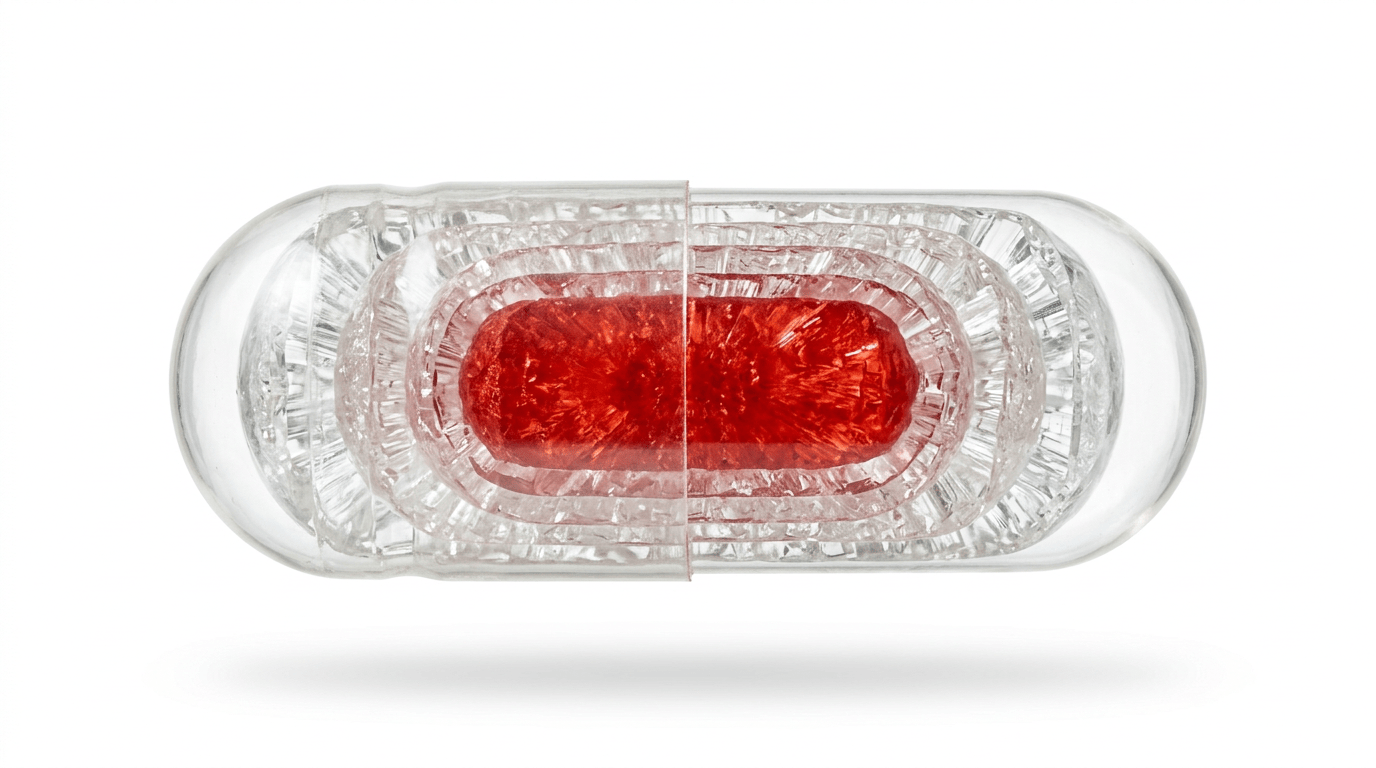
A Science-Based Probiotic Buying Guide: Strain ID, CFU Reality, and Survivability
A probiotic is not “good bacteria in a bottle.” It is a delivery problem: the right strains, still alive, in meaningful numbers, at the right place in the gut — with evidence that matches the label.
Start With Strain Identity — Not Genus Marketing
Clinical effects are strain-specific. Lactobacillus rhamnosus GG is not interchangeable with an unnamed “Lactobacillus blend.” Genus- and species-level labeling without a strain designation (e.g., Bifidobacterium longum BL21 vs. an unspecified B. longum) makes it impossible to map a product to published research.
What to look for on a label:
- Full binomial name plus strain identifier (letters/numbers)
- Transparent listing of each strain, not a proprietary “blend” that hides ratios
- Avoidance of disease-cure language (disease-treatment language on labels) — those claims are neither appropriate for dietary supplements nor scientifically honest for most products
For the gut–brain and barrier context that motivates careful strain selection, see the gut–brain axis.
CFU: Count What Matters — End of Shelf Life
Colony-forming units (CFU) measure viable organisms. Two numbers are commonly confused:
- CFU at manufacture — often inflated; meaningless if most die before you swallow the capsule
- CFU through end of shelf life — the figure that reflects what you might actually consume
Ask whether the stated CFU is stated through expiration under labeled storage conditions. Refrigeration requirements, if any, should be explicit — not buried in fine print.
Higher CFU is not automatically better. Dose should be justified by the strains used and the intended structure/function outcome (e.g., supporting microbial diversity or barrier function), not by a marketing arms race to “trillions.”
Diversity vs. Dilution
Multi-strain formulas can be rational: different species occupy different niches and contribute different metabolites (short-chain fatty acids, competitive exclusion, immune-modulating surface molecules). Diversity without identity, however, is just noise — ten unnamed strains are not better than two well-characterized ones.
A useful heuristic:
- Prefer documented strains with clear roles
- Prefer formulas that explain why each strain is present
- Be skeptical of strain lists that look copied from a catalog with no delivery story
ABTIDE’s probiotic series emphasizes multi-strain architecture paired with encapsulation — diversity with a delivery mechanism, not diversity as decoration.
Survivability: Acid, Bile, and Encapsulation
Most orally ingested bacteria face gastric acid, bile salts, and digestive enzymes before they reach the intestine. Without protection, a large fraction never arrives viable.
Questions worth asking:
- Is there a described encapsulation or enteric strategy?
- Does the brand discuss survivability testing, not only ingredient purity?
- Are storage instructions realistic for how people actually use the product?
Encapsulation is not a shortcut — it is applied microbiology. The structure/function goal is delivering live organisms that can participate in the gut ecosystem, not guaranteeing colonization forever. Transient metabolic activity and competitive effects can still be meaningful.
Prebiotics and Postbiotics: Related, Not Interchangeable
Prebiotics are substrates selectively used by beneficial microbes (certain fibers and oligosaccharides). They can support the growth of resident or supplemented strains.
Postbiotics are inactivated microbial cells or their components/metabolites. They do not require viability, which can simplify stability — but they are a different tool with different evidence.
A complete gut-support strategy may combine probiotic organisms, prebiotic substrates, and dietary fiber from food. None of these “cure” disease. They support ecological and barrier functions that nutrition can influence.
A Practical Checklist Before You Buy
- Strain-level IDs listed for every organism
- CFU stated through end of shelf life
- Clear storage and expiry dating
- Survivability / encapsulation story that matches gastric reality
- Structure/function claims only — no disease treatment language
- Alignment with your clinician’s advice if you are immunocompromised, acutely ill, or on complex medication regimens
If two products both meet the checklist, prefer the one that explains mechanisms in restrained language over the one that promises dramatic symptom reversal. Marketing intensity is often inversely related to strain transparency.
Precision nutrition treats the microbiome as a lever — not a shortcut. For how gut ecology connects to systemic inflammatory tone in broader metabolic discussions, see also cardiometabolic nutrition framing.
These statements have not been evaluated by the Food and Drug Administration. This product is not intended to diagnose, treat, cure, or prevent any disease.
ABTIDE Wellness — Vancouver. Educational content only.