Oxidative Stress Defense: ROS, Endogenous Enzymes, and Why Mitochondrial Targeting Matters
Reactive oxygen species are not villains by default — they are signaling molecules that become a problem when production outruns clearance. Precision nutrition supports antioxidant capacity. It does not treat disease.
What Reactive Oxygen Species Actually Are
Reactive oxygen species (ROS) are oxygen-containing molecules that can oxidize lipids, proteins, and DNA when present in excess. Common examples include superoxide, hydrogen peroxide, and hydroxyl radicals. Mitochondria generate a substantial share of cellular ROS as a byproduct of electron transport during ATP production.
ROS also serve physiological roles: immune defense, redox signaling, and adaptation to training stress. The wellness goal is not “zero ROS.” It is balance — enough signal for adaptation, enough clearance to protect membranes and macromolecules under load.
Structure/function framing: support the body’s antioxidant networks and cellular resilience under oxidative load. Dietary supplements are not intended to diagnose, treat, cure, or prevent any disease.
Layer One: Endogenous Enzymatic Defense
Before any capsule enters the picture, cells run a built-in antioxidant enzyme system:
- Superoxide dismutase (SOD) converts superoxide to hydrogen peroxide
- Catalase and glutathione peroxidase help convert hydrogen peroxide toward less reactive water and oxygen
- Glutathione and related recycling enzymes maintain a reduced intracellular environment
These systems depend on cofactors (including selenium, zinc, copper, and manganese in various enzyme contexts) and on overall metabolic health. Sleep deprivation, smoking, ultra-processed dietary patterns, and uncontrolled metabolic stress can tilt the balance toward higher oxidative burden — lifestyle still dominates the equation.
Layer Two: Dietary and Supplemental Antioxidants
Vitamins C and E are the classic dietary antioxidants taught in nutrition textbooks.
Vitamin C (ascorbic acid) is water-soluble. It donates electrons in aqueous compartments (plasma, cytosol) and helps regenerate oxidized vitamin E. It is rapidly turned over; tissue levels rise and fall with intake on a shorter timescale than many people assume.
Vitamin E (tocopherols/tocotrienols) is fat-soluble. It sits in membranes and interrupts lipid peroxidation chain reactions. Its job is compartment-specific: protect fatty acid–rich membranes, not “flood the whole cell” with one universal antioxidant.
Both are useful. Neither is a complete story. Many antioxidants neutralize ROS by becoming reactive intermediates themselves — a cycling problem that cells then have to resolve. Dose, form, and context matter; megadoses are not automatically better for structure/function goals.
ABTIDE’s foundational antioxidant support in food-form vitamin C lives under Essentials. For the broader cellular-health map, see Our Science.
Layer Three: Mitochondrial-Targeted Retention — Ergothioneine
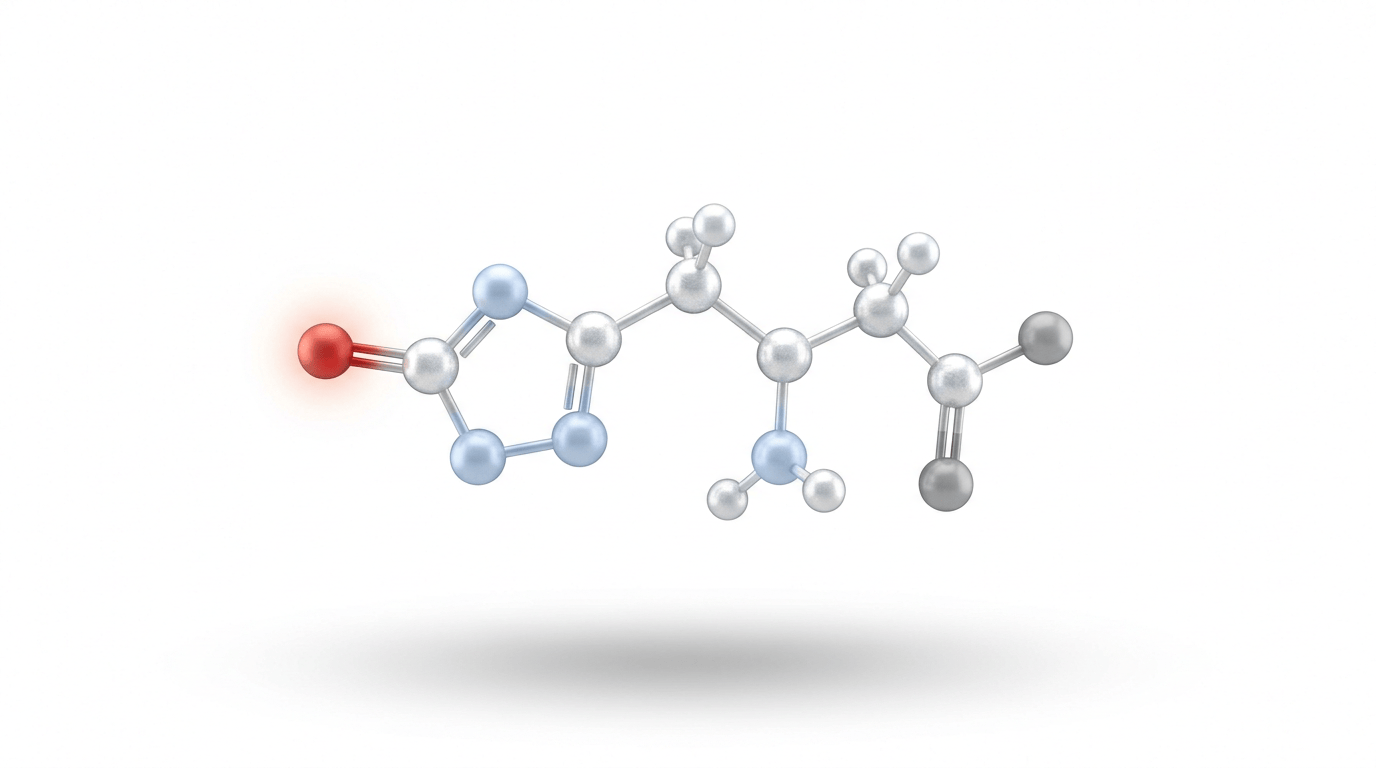
Not all antioxidants distribute the same way. L-ergothioneine is a sulfur-containing amino acid derivative that cells actively import via the OCTN1/ERGT1 transporter. It preferentially concentrates in high-stress compartments — including mitochondria — and shows unusually long tissue retention relative to vitamins cleared within hours.
Mechanistic distinctions versus C and E (structure/function, not superiority theater):
| Feature | Vitamin C / E | Ergothioneine |
|---|---|---|
| Primary compartments | Aqueous (C) / membranes (E) | High-stress organelles including mitochondria |
| Uptake | Diet/absorption + tissue use | Dedicated transporter (OCTN1/ERGT1) |
| Tissue persistence | Hours to days (context-dependent) | Multi-week tissue half-life often discussed (~30 days) |
| Role framing | Foundational micronutrient antioxidants | Cellular antioxidant capacity with selective retention |
Ergothioneine’s chemistry allows ROS neutralization without the same pro-oxidant recycling burden associated with some classical antioxidants. That is a mechanistic rationale for pairing — not a claim that one molecule replaces a varied diet or treats oxidative-stress–related disease.
Primers: ergothioneine longevity and ergothioneine research. Product architecture: Ergothioneine series.
Putting the Layers Together
A restrained oxidative-stress protocol looks like stacking systems, not chasing a single “master antioxidant”:
- Train and recover. Exercise raises ROS transiently; adaptation depends on recovery, sleep, and adequate protein/EAAs (amino series; amino research).
- Eat plants and quality fats. Polyphenols and membrane lipids support endogenous networks; see adjacent framing in inflammaging and precision nutrition.
- Close micronutrient gaps. Vitamin C/E adequacy still matters for water- and lipid-phase defense.
- Consider mitochondrial-retained adjuncts such as ergothioneine after foundations are in place — especially when training load, aging, or low mushroom intake make dietary ergothioneine sparse.
- Remeasure when useful. Oxidative markers are nonspecific; interpret them inside a clinician-guided biomarker loop.
Bottom Line
Oxidative stress is an imbalance problem, not a marketing slogan. Endogenous enzymes do the heavy lifting; vitamins C and E cover aqueous and membrane niches; transporter-retained molecules such as ergothioneine add mitochondrial-facing persistence. Use structure/function language, keep lifestyle primary, and skip disease-treatment claims.
These statements have not been evaluated by the Food and Drug Administration. This product is not intended to diagnose, treat, cure, or prevent any disease.
ABTIDE Wellness — Vancouver. Educational only. Not medical advice.