Nutrigenomics Primer: Genes, Nutrients, and MTHFR Nuance Without Overclaim
Nutrigenomics asks how genetic variation influences response to nutrients — and how nutrients influence gene expression networks. Used carefully, it is a precision input. Used carelessly, it becomes destiny marketing. This primer stays on the careful side.
A Working Definition
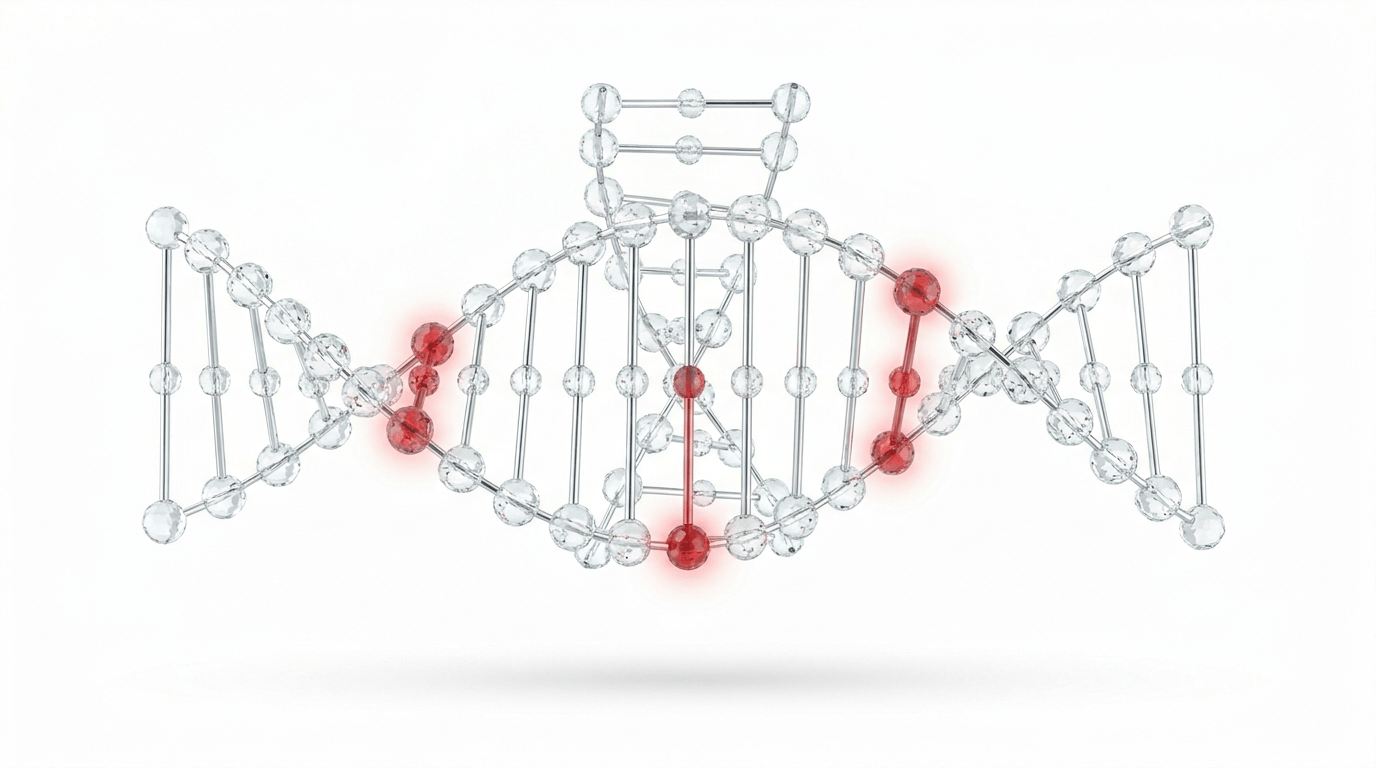
Nutrigenomics broadly covers interactions among diet, nutrients, and the genome — including how genotype may shift nutrient requirements or response, and how nutrition can influence epigenetic marks such as DNA methylation. Related terms you will see:
- Nutrigenetics — often emphasizes how gene variants affect response to diet
- Epigenetics / nutritional epigenomics — marks and expression changes influenced by environment and nutrients without changing DNA sequence
None of these fields authorize consumer supplements to diagnose, treat, cure, or prevent genetic disease. Dietary supplements are not intended to diagnose, treat, cure, or prevent any disease.
For ABTIDE’s systems framing, see Our Science and what precision nutrition is.
What Genotype Is Good For (and What It Is Not)
Useful consumer framing:
| Genotype can help… | Genotype cannot replace… |
|---|---|
| Hypothesize form preferences (e.g., methylfolate discussions) | Medical genetics counseling for disease risk |
| Explain some inter-individual differences | A full diet, sleep, and training program |
| Prioritize which biomarkers to watch | Diagnosis of inborn errors of metabolism |
| Reduce one-size-fits-all megadosing | Prescribed therapy for clinical disease |
Most common polygenic and common-variant reports are probabilistic, not deterministic. Lifestyle still dominates day-to-day metabolic outcomes for the vast majority of wellness decisions.
MTHFR: Real Enzyme, Inflated Industry
MTHFR encodes methylenetetrahydrofolate reductase, which helps generate 5-methyltetrahydrofolate (5-MTHF) for remethylation chemistry in one-carbon metabolism. Common polymorphisms can reduce enzyme efficiency to varying degrees. That biochemical fact is real. The marketplace story often is not.
Restrained nuance:
- Carrying a common MTHFR variant is not a disease diagnosis
- Many people with common variants do well with adequate food folate, overall diet quality, and standard clinical care
- Methylfolate can be a rational form discussion when converting folic acid appears inefficient — not a mandate for everyone to megadose methyl donors
- Homocysteine and B-vitamin status are often more actionable laboratory conversations than genotype alone
Deep dives: DNA methylation nutrition, B-complex methylation, homocysteine intervention education, epigenetic aging.
Genetic information used for supplementation decisions should be interpreted with a qualified professional — especially if pregnancy planning, neuropathy, or unexplained anemia is in the picture.
One-Carbon Metabolism: The Chemistry Behind the Buzzword
Methyl groups used in DNA methylation chemistry are supplied through S-adenosylmethionine (SAM). Regenerating that network depends on folate cycle activity, vitamins B12 and B6, and alternative donors such as choline-derived betaine. Nutrigenomics interest in MTHFR sits inside this larger cast — not above it.
Structure/function goal: support one-carbon nutrient adequacy so methylation chemistry has substrate and cofactors. Claiming to “rewire your genes,” “detox your DNA,” or “reverse aging clocks” with a retail genotype kit plus capsules is outside responsible territory.
Other Gene–Nutrient Examples (Educational, Not Protocols)
Without inventing citations or protocols:
- Lactase persistence variants influence dairy sugar tolerance — a classic nutrigenetic teaching example about food pattern, not a supplement upsell
- Lipid-handling and caffeine-metabolism variants sometimes appear in consumer reports — useful for hypothesizing tolerance, not for disease treatment
- Vitamin D binding / receptor discussions appear in research; status still hinges on 25(OH)D, latitude/lifestyle, and intake (vitamin D guide)
Pattern recognition: genotype suggests questions; biomarkers and clinical context answer them (precision nutrition biomarkers).
How to Use Nutrigenomics Inside an ABTIDE-Style Stack
- Fix foundations first — protein/EAAs (amino, research-amino), sleep, training, dietary pattern
- Cover micronutrient and membrane floors (Essentials)
- Use methylation-supportive education and cellular nutrients in structure/function terms (ergothioneine, research-ergo) — complementary conversations, not gene therapy
- Add genotype only when it changes form or monitoring choices
- Reassess with labs and symptoms under clinician guidance
Consumer buying loop: consumer guide. On-ramps: solutions, quiz. Gut ecology remains a separate axis (probiotics).
Hard Boundaries
This article does not claim to treat genetic diseases, hereditary cancer syndromes, inborn errors of metabolism, autism, or cardiovascular disease via genotype-guided supplements. It does not replace medical genetic testing ordered for clinical indications. Direct-to-consumer reports vary widely in analytic and clinical validity — verify before acting.
Bottom Line
Nutrigenomics is a precision input: gene–nutrient interactions can refine form choices and monitoring, especially around one-carbon metabolism and MTHFR nuance. It is not destiny, not detox theater, and not genetic disease treatment. Anchor decisions in methylation education, biomarkers, and foundations — then let genotype whisper, not shout.
These statements have not been evaluated by the Food and Drug Administration. This product is not intended to diagnose, treat, cure, or prevent any disease.
ABTIDE Wellness — Vancouver. Educational only. Not medical advice.